A commercial auto coverage form is the policy document that sets the framework for how a business auto policy is read. For a restaurant owner, the form belongs beside the declarations page, vehicle schedule, endorsements, and the real details of delivery, catering, supply runs, and employee driving. The documents need to be read together because a familiar vehicle or coverage label does not settle every question.
The phrase often refers to the Business Auto Coverage Form, commonly identified as CA 00 01. A commercial auto forms list identifies CA 00 01 11 20 as the Business Auto Coverage Form. The edition, carrier, endorsements, declarations, and the restaurant's actual operations all matter, so the form is a starting point for a policy review, not a shortcut to an answer about a particular loss.
The form sets the policy framework
A coverage form is different from a certificate, a quote, or a declarations page. The form supplies the policy language behind the coverage conversation. The declarations page identifies what was selected, while schedules and endorsements can add detail or modify terms. A certificate may respond to a request from a landlord, venue, lender, or delivery partner, but it is not the complete policy.
Keep those documents together when the restaurant reviews its auto coverage. A delivery van, catering truck, food truck, rented cargo van, or employee vehicle can create a different question. The useful task is to match the document set with the way people and vehicles support the operation now.
Covered auto designations need to be read line by line
A business auto policy can use covered-auto designations beside individual coverage lines. Those designations are not a label for the entire policy. A restaurant owner should look at the coverage line, the designation beside it, the vehicle involved, and any schedule or endorsement that affects the question.
That is why E&A's commercial auto coverage symbols guide focuses on the numbers alongside the policy documents. A symbol can help frame the vehicle category being discussed, but the policy wording and the business facts still determine what needs a closer review.
Read the designation with the vehicle arrangement in mind. A business-owned delivery van, a leased catering vehicle, and an employee's personal car can raise different questions even when all three support the same restaurant operation.
Declarations show what was selected for the restaurant
The declarations page is the most practical companion to the coverage form. It can identify the named insured, policy period, coverage lines, limits, deductibles, and vehicle information selected for the policy. Begin by checking the business name, the listed vehicles or vehicle categories, and the coverage lines the restaurant depends on.
Read each line separately. Liability, physical damage, medical payments, uninsured or underinsured motorist coverage, and other coverage lines can call for different questions. A limit or designation shown on one line should not be treated as a promise about another line.
Save a current copy before a renewal meeting or contract discussion. It gives the restaurant a common reference point when a landlord, venue, lender, or delivery partner asks about a coverage requirement.
The vehicle schedule should match the vehicles in use
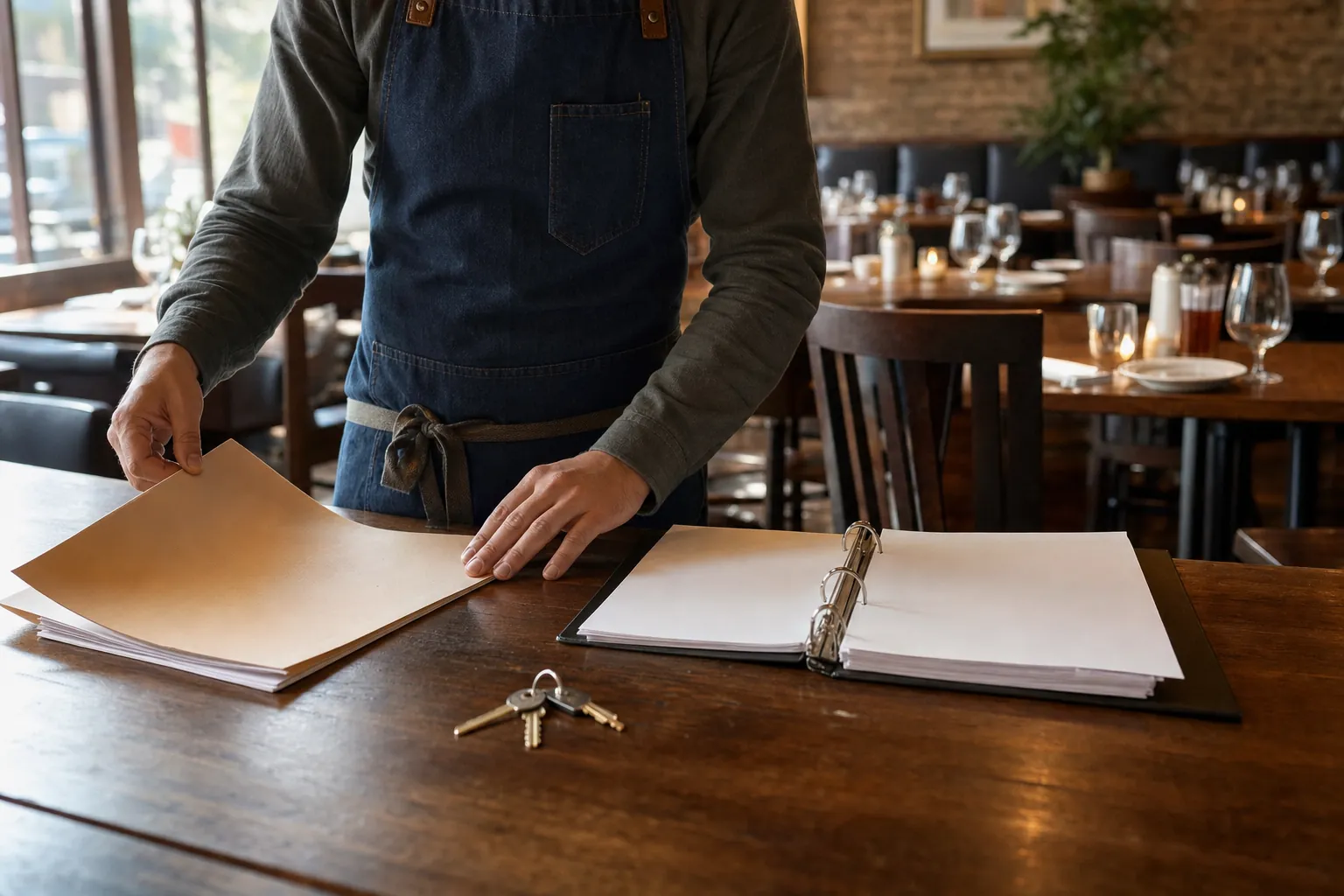
Restaurant operations change more often than a policy file does. A new delivery vehicle, a leased catering van, a food truck, a trailer, or a vehicle that was sold can all prompt a review. Put the current keys, registrations, leases, and operating vehicle list beside the schedule before renewal or before launching a new route.
Also note who drives each vehicle, what it carries, where it goes, and how often the business relies on it. Those details make it easier to describe the question accurately. E&A's commercial auto coverage page explains why delivery, catering, manager travel, and employee driving belong in the same conversation.
Conditions and exclusions deserve the same attention as limits
A policy review should not stop at the limit shown on the declarations page. Conditions describe responsibilities that can matter when an incident occurs. Exclusions identify situations, losses, people, property, or activities that may not be addressed by the policy. Endorsements can add, change, or limit terms.
Bring these pages forward when the restaurant begins delivery, signs a catering contract, uses an outside driver, adds a vehicle, or changes its ownership structure. The purpose is not to interpret a claim without the full record. It is to identify the questions that should be answered before the business relies on a vehicle arrangement.
Hired and non-owned vehicle use needs a clear operating description
Not every business trip happens in a restaurant-owned vehicle. A rented vehicle, a borrowed van, or an employee's personal car used for a supply run can raise questions that do not appear on a basic vehicle list. Describe who owns or rents the vehicle, who drives it, what the trip supports, and whether the business reimburses the driver or has a contract requirement.
That same detail is useful when a caterer travels to an event or moves equipment between a kitchen, storage location, and venue. E&A's caterer insurance guidance can help organize the vehicle, staff, equipment, and contract details that may belong in the review.
Restaurant contracts can point to the documents that need review
A venue agreement, lease, lender document, delivery arrangement, or catering contract may ask for insurance evidence or specific wording. Keep the request with the policy documents instead of treating a certificate request as a complete explanation of the requirement. The named party, vehicle activity, dates, and insurance language all need to be understood in the context of the agreement.
For example, a restaurant that takes a catering job may need to explain who will drive, whether equipment or food is being transported, where the vehicle will be parked, and which business signs the agreement. The policy form is one part of the document set. The contract and the operating facts often explain why the question is being asked in the first place.
Changes in the operation should trigger a document check
Vehicle coverage questions can change when a restaurant adds delivery, opens another location, starts catering, purchases a vehicle, leases a replacement, hires a driver, or changes the business entity that owns the vehicle. The most useful review happens before the change becomes routine. Waiting until an accident, contract deadline, or busy event week makes it harder to collect the right facts.
Write down the change in plain language. State which vehicle is involved, who will drive it, how often it will be used, what the trip supports, and which business is responsible. That short operating description can make the conversation more precise than a general request to confirm that a vehicle is covered.
Policy documents help owners prepare questions before a claim
A policy form provides important language, but no single page can decide what will apply to a future incident. The coverage line, declarations, schedule, endorsements, conditions, exclusions, and facts of the loss all belong in the analysis. Restaurant owners should avoid assuming that a familiar term, a listed vehicle, or a certificate settles a question by itself.
A better approach is to identify the precise question before contacting an advisor. Is the concern about an employee using a personal vehicle? A delivery route? A rented van? A new food truck? A catering requirement? Bringing the document and the operating facts together gives the review a clear starting point.
A form review is most useful before operations change
Set aside the current declarations page, coverage form, vehicle schedule, endorsements, driver list, and any contract that includes insurance requirements. Then mark what changed since the prior policy period: vehicles, drivers, delivery activity, catering work, business names, locations, or travel patterns.
A restaurant does not need to decide what a policy will do on its own. It does need to explain the operation accurately. A complete operating picture gives the coverage conversation a stronger place to begin and makes it easier to spot a document that needs closer attention.
This preparation also helps separate a routine policy update from a question that needs detailed attention. A specific change, documented early, is easier to discuss than a vague recollection after the work has already started.
The coverage review document set
- The declarations page, current coverage form, endorsements, and vehicle schedule.
- A current list of owned, leased, rented, borrowed, and regularly used vehicles, food trucks, and trailers.
- Driver details, including employee driving, delivery activity, catering routes, supply runs, and travel between locations.
- Vehicle registrations, leases, finance documents, and contracts that request insurance evidence.
- A short description of what changed since the last policy period.
The Business Auto Coverage Form sets the policy framework
A commercial auto coverage form gives the policy conversation its structure. The declarations page, designations, schedules, endorsements, conditions, and exclusions supply the detail. The restaurant's vehicles, drivers, routes, and contracts supply the real-world context.
When those pieces are reviewed together, an owner can ask more precise questions before a new vehicle, delivery program, or event creates pressure. For help preparing that conversation, contact E&A Insurance Group with the documents and operating changes at hand.